Most website owners obsess over keywords and backlinks, yet they forget the one thing that holds everything together: technical SEO. Without a solid technical base, even the best content struggles to rank. Search engines must be able to crawl, understand, and index a site before rankings ever come into the picture. That’s why technical SEO deserves far more attention than it usually gets.
What Technical SEO Actually Means
Technical SEO refers to the process of optimizing a website’s infrastructure so that search engines can crawl and index it efficiently. It has nothing to do with keywords or blog content directly. Instead, it focuses on site speed, mobile responsiveness, secure connections, clean code, and proper indexing signals. A website can publish excellent articles, but if the server responds slowly or the site architecture confuses crawlers, those articles may never reach their full potential in search results.
Search engine bots crawl millions of pages every day. When a site is built with clean, logical structure, bots move through it easily. When the structure is messy, pages get skipped, misread, or ignored altogether. This is where technical SEO earns its importance.
Core Elements That Shape Technical SEO
Site Speed and Performance
Page loading speed influences both user experience and search rankings. Visitors abandon slow pages within seconds, and search engines notice this behavior. Compressing images, minimizing code, and using reliable hosting all contribute to faster load times. A fast website is created by developers who prioritize efficient code over unnecessary scripts.
Mobile Friendliness
Most searches now happen on mobile devices. Google evaluates the mobile version of a site first when determining rankings, a practice known as mobile-first indexing. If a site isn’t responsive, visitors will leave it quickly, and rankings will suffer as a result.
Crawlability and Indexing
Search engine bots need clear pathways through a website. XML sitemaps, robots.txt files, and internal linking all guide these bots toward important pages. A well-organized sitemap is read by crawlers far more efficiently than a chaotic one. Broken links and duplicate content, on the other hand, waste crawl budget and confuse indexing signals.
Secure and Accessible Architecture
HTTPS encryption has become a standard requirement, not an optional upgrade. Sites without secure connections are flagged by browsers and often penalized in rankings. Structured data, also known as schema markup, helps search engines interpret page content more accurately, which can lead to rich results like star ratings or FAQ snippets.
Why Technical SEO Cannot Be Ignored
Many businesses invest heavily in content marketing while neglecting the technical side entirely. This imbalance often produces disappointing results. Content is written by skilled writers, but if the site itself is riddled with errors, that content rarely gets the visibility it deserves. Technical SEO acts as the gateway; without it, even outstanding content remains hidden from the audience it was meant to reach.
Consider two websites with identical content quality. One loads in two seconds and has a clean URL structure. The other takes eight seconds to load and contains duplicate pages. The first site will almost always outperform the second, regardless of how good the writing is. This comparison illustrates exactly why technical SEO matters so much in competitive industries.
Common Technical SEO Mistakes
Broken redirects, missing alt text, duplicate meta descriptions, and slow server response times are among the most frequent issues found during audits. Many of these problems go unnoticed because they don’t affect the visible design of a page. A website might look perfect to a visitor while carrying serious technical flaws underneath. Regular audits are conducted by experienced SEO professionals to catch these hidden issues before they damage rankings.
Building a Sustainable Technical SEO Strategy
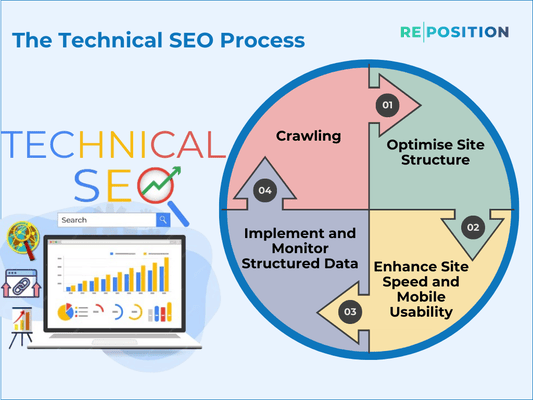
A strong technical SEO strategy starts with a full site audit. From there, priorities should be set based on impact: fixing crawl errors first, followed by speed optimization, mobile responsiveness, and structured data implementation. This process isn’t a one-time task. Search engine algorithms evolve constantly, so technical SEO requires ongoing maintenance rather than a single fix.
Conclusion
Technical SEO forms the backbone of every successful search strategy. It ensures that search engines can find, understand, and rank a website’s content properly. Ignoring it means leaving potential traffic on the table, no matter how compelling the content might be. Businesses that treat technical SEO as an ongoing priority, rather than an afterthought, consistently see stronger and more stable search performance over time.